
Machine perception → human perception
Artificial
human senses.
Murre is building a system that turns useful machine-visible signals into stable tactile patterns people can learn to recognize.
Machine state,
beyond the screen.
Murre reads machine-visible state, tests which signals are useful, and compiles selected information into a stable tactile mapping.
01 — Read
Ingest machine-visible state.
Thermal, depth, vibration, telemetry, and other machine-readable signals enter a shared input layer.
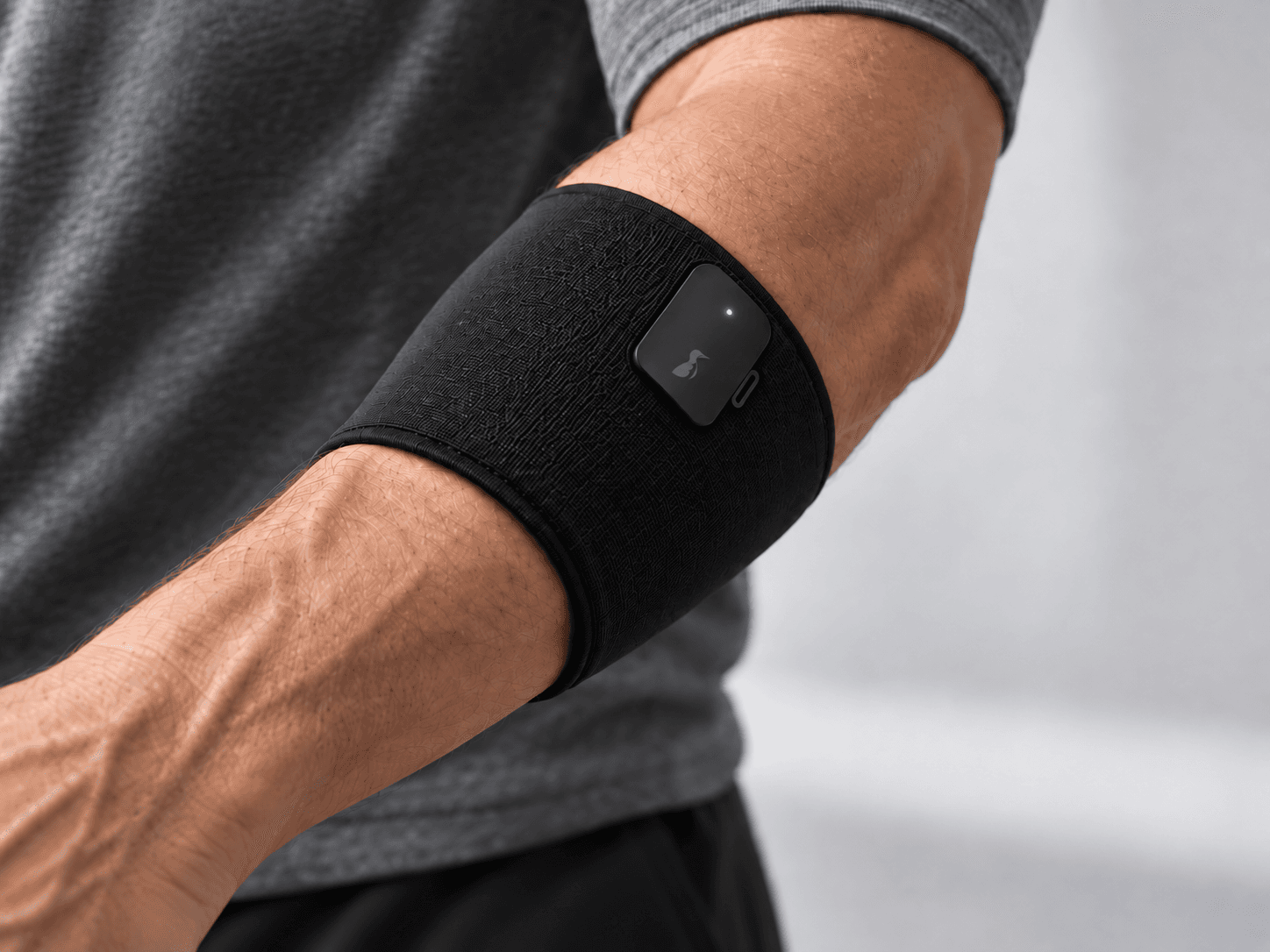
Murre Band
Touch becomes
a data channel.
A forearm-worn tactile array that encodes machine state while leaving eyes, ears, and hands free.
Leaves eyes, ears, and hands available.
Calibrated to distinctions a person can resolve.
Mappings freeze long enough to become learnable.
Directional mapping
Direction,
without looking.
Move the target. Direction selects a tactile zone; proximity controls intensity. One signal becomes a learnable pattern.
One possible tactile mapping, shown for illustration—not a claim about a finished Sense.
A new percept
has to earn its place.
Each mapping is evaluated for recognition, learning, retention, task performance, and cognitive load.
The long view
Software taught machines to perceive the world.
Murre is building the path back.
Seeking research collaborators and pilot environments where hidden machine state has measurable value.
Work with Murre